
Think Cardiomyopathy: Know Your Heart History this Cardiomyopathy Awareness Month
1 June 2026
Cardiomyopathy is a disease of the heart muscle that can occur at any age and can be passed down genetically
Global Heart Hub (GHH), the international alliance of heart patient organisations, is proud to launch its 2026 Cardiomyopathy Awareness Month campaign for the month of June, Think Cardiomyopathy: Know Your Heart History. Cardiomyopathy is a disease of the heart muscle that affects the heart’s ability to pump blood around the body. It can affect people of all ages and can develop for different reasons, but is often passed down genetically. Prevalence varies based on type, but overall, cardiomyopathy affects around 1 in every 250 people worldwide.
Signs and symptoms of cardiomyopathy can vary widely. In its earliest stages cardiomyopathy may not have symptoms and some individuals may not notice symptoms that are mild. For others, symptoms interfere with day-to-day life and worsen over time, and can include irregular or rapid heartbeat (palpitations or arrythmia), fatigue, feeling out of breath or having trouble breathing, dizziness or fainting, heaviness in the chest or chest pain, bloating of the stomach area, swelling of the legs, ankles, and feet.
Often underdiagnosed, misdiagnosed, or diagnosed too late, the consequences of cardiomyopathy can be very serious. Cardiomyopathy can lead to severe manifestations, including heart failure and sudden unexpected death, even in people with minimal or no symptoms.
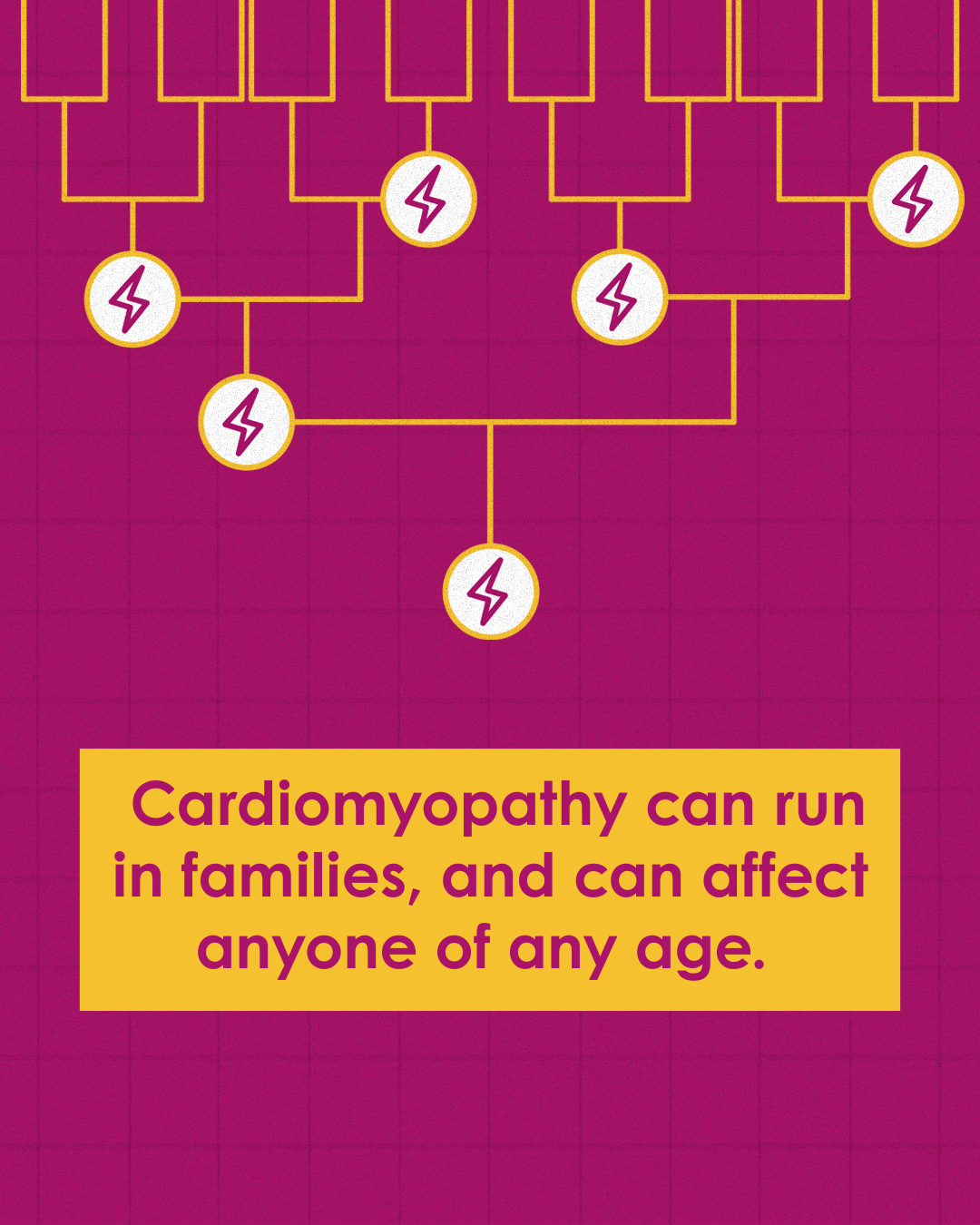
Think Cardiomyopathy. Know Your Heart History.
“For many people, the warning signs of cardiomyopathy come from the patterns that exist across generations, in your own family tree. Understanding these patterns can help you ask new questions, identify potential risks and take action earlier,” says Ruth Biller, Chair of GHH’s Cardiomyopathy Network and founder of ARVC-Selbsthilfe, Germany. Ruth’s daughter, Judith, died of sudden cardiac death at the age of 14. A year later, she learned it was a cardiomyopathy. “If my niece, who had survived a cardiac arrest six years earlier, had been diagnosed right away, Judith might still be alive today. Talk to your family about their heart health. If there is a history of heart problems of any kind across several generations, ask your doctor about it and, if necessary, ask to be referred to a specialized center for rare heart diseases,” says Ruth.
The 2026 international campaign is led by the Cardiomyopathy Patient Network of Global Heart Hub, an alliance of patient organisations from across the globe. For more information or to support this campaign, see https://globalhearthub.org/cardiomyopathy-awareness-2026
Global Heart Hub’s 2026 campaign has been made possible by a sponsorship grant from Bristol Myers Squibb and EdgeWise. Sponsors had no input or involvement in the design, development or content of the campaign.