
Heart Failure Awareness Month, May 2026
Connected Care for Connected Conditions
Seeing the whole picture. Treating the whole person.
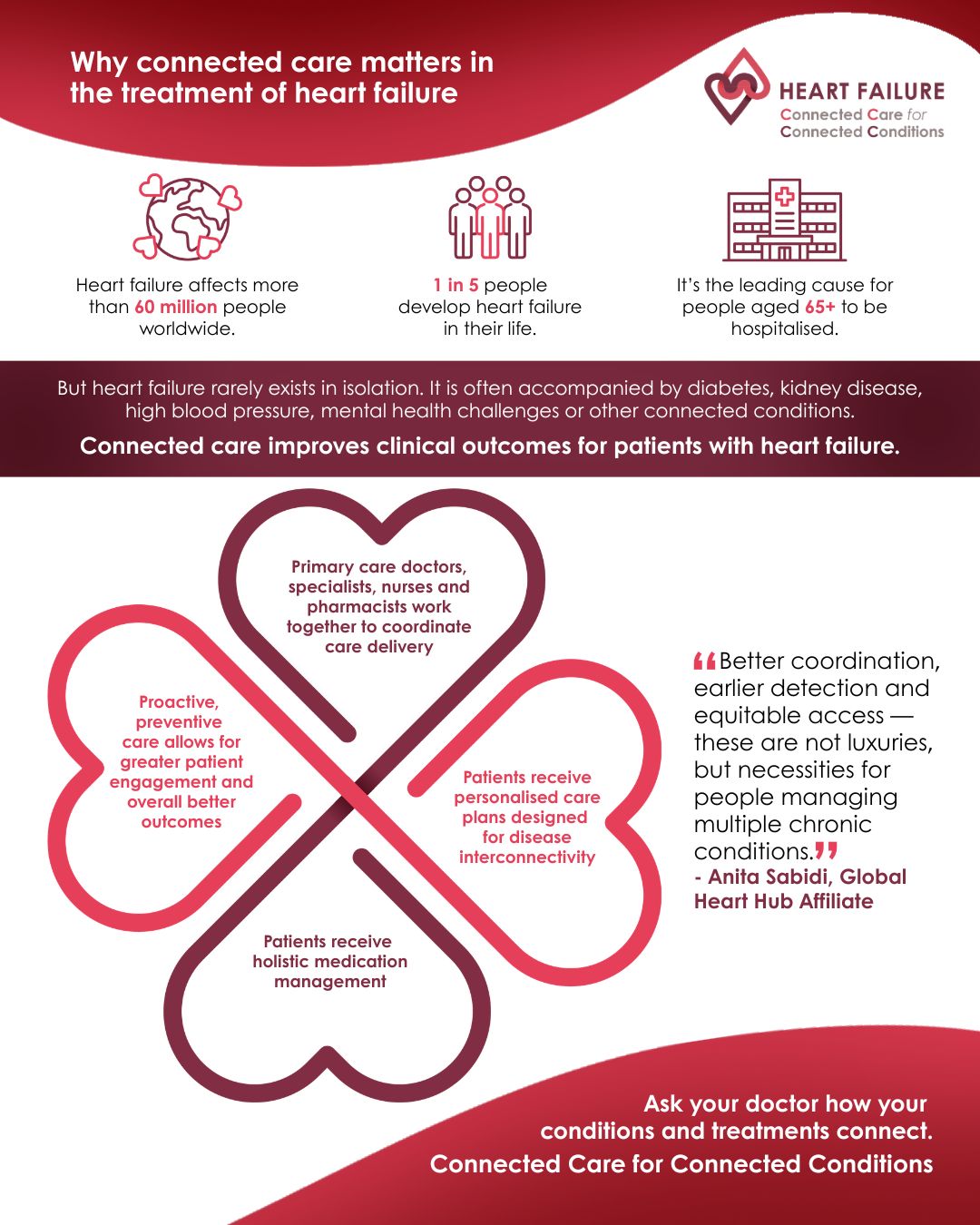
Heart failure affects more than 60 million people worldwide. It is a serious, progressive condition where the heart is weaker or stiffer than normal, making it harder for blood to circulate properly. 1 in 5 people develop heart failure in their life and it’s the leading cause for people aged 65+ to be hospitalised. But heart failure rarely exists in isolation. It is often accompanied by diabetes, kidney disease, high blood pressure, mental health challenges or other connected conditions. These conditions influence one another; when one worsens, the others often follow. They are connected conditions.
Some of these connected conditions can cause heart failure, some can be caused by it. But all of them mean that heart failure treatment must be connected to these other health conditions. The best response to heart failure is to see the whole picture and treat the whole person.
#HeartFailure #ConnectedCare #ConnectedConditions
Share This Message!
Share the campaign video in your local language:
(Arabic) 2026
(Brazilian Portuguese) 2026
(Estonian) 2026
(German) 2026
(Hindi) 2026
(Latvian) 2026
(Lithuanian) 2026
(Romanian) 2026
(Spanish LATAM) 2026
(Swahili) 2026
Heart Failure Connected Conditions:
Diabetes
High blood sugar can damage blood vessels over time, making them stiff and narrow. This places extra strain on the heart. That’s why diabetes increases the risk of heart failure.
Hypertension
Hypertension (high blood pressure) is often called “the silent condition” because you may not feel it, but your heart does. Hypertension puts extra strain on the heart, which over time can lead to heart failure.
Kidney Disease
The heart and the kidneys work as a team: when one is affected, the other is too. When the kidneys are not working well, fluid can build up, adding strain to the heart. And when the heart can’t pump effectively, the kidneys may receive less blood. That’s why chronic kidney disease increases the risk of heart failure, and in turn, heart failure increases the risk of chronic kidney disease.
Mental Health
Living with a chronic condition like heart failure can feel overwhelming. People living with heart failure often face mental health challenges like anxiety or depression, and over time these challenges can make managing heart failure more difficult and affect overall heart health.
Patient Quotes
What we wish we knew: lived experiences of those living with, and affected by, heart failure.
Questions to ask your doctor
Ask your healthcare provider how your conditions and treatments connect on your next visit.
Get Involved
Led by Global Heart Hubs Heart Failure Patient Network, the 2026 Heart Failure Awareness Campaign focuses on the importance of managing heart failure and connected conditions. The Heart Failure Patient Network is an alliance of patient organisations from across the globe, working with heart failure patients and their carers. A priority of the Network is to raise awareness of heart failure, promote public and healthcare education and advocate for policy action in an insufficiently recognised and increasingly burdensome disease area.

To join the campaign or for more information, please email info@globalhearthub.org.